

Need help paying for treatment
and getting started?
NEXSTEP Patient Support can help you get started with NEXLIZET or NEXLETOL.


If your doctor prescribes NEXLIZET or NEXLETOL, the NEXSTEP Patient Support Program can help:
-

Give you information about why you may need cholesterol treatment
-
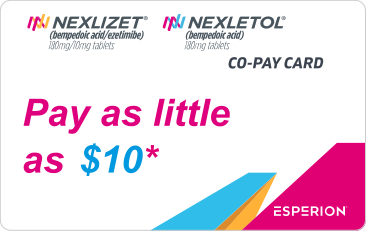
Offer a Co-Pay Card to help with the cost of your prescription if you have commercial insurance
-
-
NEXLIZET and NEXLETOL are covered on most insurance medication plans
If you have commercial insurance, you may be eligible to pay as little as $10 for each 30-day supply or $25 for a 90-day supply of NEXLIZET or NEXLETOL.*
-
Eligibility Requirements
A patient may be eligible for the NEXLIZET & NEXLETOL Co-Pay Card if they meet the eligibility criteria below:
- must be at least 18 years of age, AND
- has a valid prescription for NEXLIZET or NEXLETOL, AND
- has commercial prescription drug insurance, AND
- is a resident of the United States, including the District of Columbia but excluding territories (such as Puerto Rico and the US Virgin Islands), AND
- is not enrolled in any state-, federal-, or government-funded healthcare program, including but not limited to Medicare, Medicaid, Medigap, TRICARE of the Department of Defense, or the Department of Veterans Affairs (VA) healthcare program (collectively referred to as “Government Program”).
Should a patient have any change in insurance coverage or become enrolled in a Government Program during their enrollment in the NEXLIZET & NEXLETOL Co-Pay Card program, they must inform a NEXLIZET & NEXLETOL Co-Pay Card program representative and will no longer be eligible for the NEXLIZET & NEXLETOL Co-Pay Card program. Also, if a patient is enrolled in a Government Program, they may not use the NEXLIZET & NEXLETOL Co-Pay Card program even if they elect to be processed as a commercial or discount insurance plan patient.
Have questions about your NEXLIZET & NEXLETOL Co-Pay Card?
Call 1-855-699-8814
(8:00AM-8:00PM ET, Monday-Friday, excluding holidays).
*For eligible privately or commercially insured patients. Patients covered by
federal or state healthcare programs are not eligible for co-pay assistance.
Certain restrictions apply. See Terms and Conditions.


Find the information you need to help take control of your heart health.
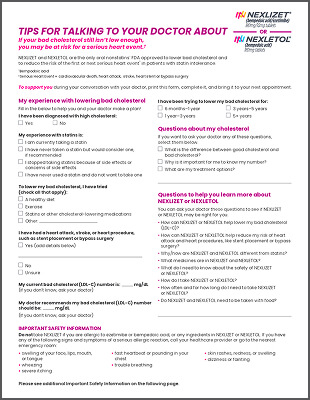

Get answers to frequently asked questions about NEXLIZET and NEXLETOL.
If you have additional questions, talk to your doctor or pharmacist.
-
What is NEXLIZET?
NEXLIZET is a prescription medicine that contains 2 cholesterol-lowering medicines, bempedoic acid and ezetimibe.
- NEXLIZET is used along with diet and exercise to reduce low-density lipoprotein (LDL) or bad cholesterol in adults with high blood cholesterol levels called hypercholesterolemia, including a type of high cholesterol called heterozygous familial hypercholesterolemia.
- Bempedoic acid, a component of NEXLIZET, is used to lower the risk of major adverse cardiovascular events, such as death from cardiovascular disease, heart attack, stroke, stent placement or bypass surgery in adults at increased risk for these events who are unable to take recommended statin treatment or are not taking a statin.
-
What is NEXLETOL?
NEXLETOL is a prescription medicine used:
- to lower the risk of major adverse cardiovascular events, such as death from cardiovascular disease, heart attack, stroke, stent placement or bypass surgery in adults at increased risk for these events who are unable to take recommended statin treatment or are not taking a statin.
- along with diet and exercise and other cholesterol-lowering medicines, or alone when use with other cholesterol-lowering medicines is not possible, to reduce low-density lipoprotein (LDL) or bad cholesterol in adults with high blood cholesterol levels called hypercholesterolemia, including a type of high blood cholesterol called heterozygous familial hypercholesterolemia.
-
Who should not take NEXLIZET or NEXLETOL?
Do not take NEXLIZET if you are allergic to ezetimibe or bempedoic acid, or any ingredients in NEXLIZET or NEXLETOL. If you have any of the following signs and symptoms of a serious allergic reaction, call your healthcare provider or go to the nearest emergency room:
- swelling of your face, lips, mouth, or tongue
- wheezing
- severe itching
- fast heartbeat or pounding in your chest
- trouble breathing
- skin rashes, redness, or swelling
- dizziness or fainting
-
Is NEXLIZET safe to take?
NEXLIZET can cause serious side effects, including:
- increased levels of uric acid in the blood, which can lead to gout. Call your doctor if you have any of the following symptoms: severe foot pain, especially in the toe joint, warm joints, swelling, tender joints or joint redness.
- tendon rupture or injury. The risk of getting tendon problems while you take NEXLIZET is increased (1.2% vs 0.9% in placebo in Trial 1 and 0.5% vs 0% in placebo in Trial 2). Stop taking NEXLIZET immediately and get medical help if you experience signs of tendon rupture such as snap or pop in tendon area, bruising after an injury in a tendon area, or unable to move or put weight on the affected area.
The most common side effects of the medications in NEXLIZET observed in clinical trials include symptoms of the common cold or flu-like symptoms, muscle spasms, back pain, stomach pain, bronchitis, pain in shoulder, legs, or arms, anemia, increased liver enzymes, diarrhea, joint pain, swelling of sinuses, fatigue, kidney problems, and gallstones.
These are not all the possible side effects of NEXLIZET. Ask your healthcare provider or pharmacist for more information.
-
Is NEXLETOL safe to take?
NEXLETOL can cause serious side effects, including:
- increased levels of uric acid in the blood, which can lead to gout. Call your doctor if you have any of the following symptoms: severe foot pain, especially in the toe joint, warm joints, swelling, tender joints or joint redness.
- tendon rupture or injury. The risk of getting tendon problems while you take NEXLETOL is increased (1.2% vs 0.9% in placebo in Trial 1; 0.5% vs 0% in placebo in Trial 2). Stop taking NEXLETOL immediately and get medical help if you experience signs of tendon rupture such as snap or pop in tendon area, bruising after an injury in a tendon area, or unable to move or put weight on the affected area.
The most common side effects of NEXLETOL include symptoms of the common cold or flu-like symptoms, muscle spasms, back pain, stomach pain, bronchitis, pain in shoulder, legs, or arms, anemia, increased liver enzymes, kidney problems, and gallstones.
These are not all the possible side effects of NEXLETOL. Ask your healthcare provider or pharmacist for more information.
-
What should I tell my doctor before taking NEXLIZET?
Before taking NEXLIZET, tell your healthcare provider if you:
- have or had gout
- have or had tendon problems
- are pregnant or breastfeeding or may become pregnant or plan to breastfeed. NEXLIZET may pass into your breastmilk. You and your healthcare provider should decide if you will take NEXLIZET or breastfeed.
- have moderate or severe liver problems
Tell your healthcare provider about all the medicines you take, including prescription and over-the-counter medicines, vitamins and herbal supplements especially if you take or plan to take simvastatin, pravastatin, cyclosporine, fibrates, or cholestyramine.
-
What should I tell my doctor before taking NEXLETOL?
Before taking NEXLETOL, tell your healthcare provider if you:
- have or had gout
- have or had tendon problems
- are pregnant or breastfeeding or may become pregnant or plan to breastfeed. NEXLETOL may pass into your breastmilk. You and your healthcare provider should decide if you will take NEXLETOL or breastfeed.
- have severe liver problems
Tell your healthcare provider about all the medicines you take, including prescription and over-the-counter medicines, vitamins, and herbal supplements, especially if you take or plan to take simvastatin, pravastatin, or fibrates.
-
How should I take NEXLIZET or NEXLETOL?
NEXLIZET or NEXLETOL can be used in combination with other cholesterol-lowering medications or alone.
Take one tablet, once a day, with or without food.
Swallow the NEXLIZET or NEXLETOL tablet whole. Take 1 NEXLIZET or NEXLETOL tablet by mouth each day.
If you miss a dose, take it as soon as you remember. If you do not remember until it is time for your next dose, skip the dose you missed and continue with your regular schedule. Do not take 2 doses at the same time.
-
Do I still have to eat healthy and exercise while taking NEXLIZET or NEXLETOL?
If you take NEXLIZET or NEXLETOL to lower your cholesterol, you should also eat a heart-healthy diet and exercise regularly. Talk to your doctor about an appropriate diet and exercise plan for you.
-
Can I take NEXLIZET or NEXLETOL with other cholesterol-lowering medications?
NEXLIZET is taken alone or in combination with other cholesterol-lowering medications, like a statin.
NEXLETOL is used in combination with other cholesterol-lowering medications like a statin, or alone if you are unable to take other cholesterol-lowering medications.
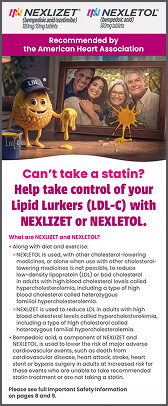
What are NEXLIZET and NEXLETOL?
- Along with diet and exercise:
- NEXLETOL is used, with other cholesterol-lowering medicines, or alone when use with other cholesterol-lowering medicines is not possible, to reduce low-density lipoprotein (LDL) or bad cholesterol in adults with high blood cholesterol levels called hypercholesterolemia, including a type of high blood cholesterol called heterozygous familial hypercholesterolemia.
- NEXLIZET is used to reduce LDL in adults with high blood cholesterol levels called hypercholesterolemia, including a type of high cholesterol called heterozygous familial hypercholesterolemia.
- Bempedoic acid, a component of NEXLIZET and NEXLETOL is used to lower the risk of major adverse cardiovascular events, such as death from cardiovascular disease, heart attack, stroke, stent placement or bypass surgery in adults at increased risk for these events who are unable to take recommended statin treatment or are not taking a statin.
IMPORTANT SAFETY INFORMATION
Do not take NEXLIZET if you are allergic to ezetimibe or bempedoic acid, or any ingredients in NEXLIZET or NEXLETOL. If you have any of the following signs and symptoms of a serious allergic reaction, call your healthcare provider or go to the nearest emergency room:
- swelling of your face, lips, mouth, or tongue
- wheezing
- severe itching
- fast heartbeat or pounding in your chest
- trouble breathing
- skin rashes, redness, or swelling
- dizziness or fainting
Before taking NEXLIZET or NEXLETOL, tell your healthcare provider if you:
- have or had gout
- have or had tendon problems
- are pregnant or breastfeeding or may become pregnant or plan to breastfeed. NEXLIZET or NEXLETOL may pass into your breastmilk. You and your healthcare provider should decide if you will take NEXLIZET or NEXLETOL or breastfeed.
- have moderate or severe liver problems
Tell your healthcare provider about all the medicines you take, including prescription and over-the-counter medicines, vitamins and herbal supplements especially if you take or plan to take simvastatin, pravastatin, cyclosporine, fibrates, or cholestyramine.
NEXLIZET and NEXLETOL can cause serious side effects, including:
- increased levels of uric acid in the blood, which can lead to gout. Call your doctor if you have any of the following symptoms: severe foot pain, especially in the toe joint, warm joints, swelling, tender joints or joint redness.
- tendon rupture or injury. The risk of getting tendon problems while you take NEXLIZET or NEXLETOL is increased (1.2% vs 0.9% in placebo in Trial 1; 0.5% vs 0% in placebo in Trial 2). Stop taking NEXLIZET or NEXLETOL immediately and get medical help if you experience signs of tendon rupture such as snap or pop in tendon area, bruising after an injury in a tendon area, or unable to move or put weight on the affected area.
The most common side effects observed in trials of:
- NEXLETOL includes symptoms of the common cold or flu-like symptoms, muscle spasms, back pain, stomach pain, bronchitis, pain in shoulder, legs, or arms, anemia, increased liver enzymes, kidney problems, and gallstones.
- NEXLIZET includes symptoms of the common cold or flu-like symptoms, muscle spasms, back pain, stomach pain, bronchitis, pain in shoulder, legs, or arms, anemia, increased liver enzymes, diarrhea, joint pain, swelling of sinuses, and fatigue.
These are not all the possible side effects of NEXLIZET and NEXLETOL. Ask your healthcare provider or pharmacist for more information.
Call your healthcare provider for medical advice about side effects. You may report side effects to FDA at 1-800-FDA-1088.
Please see full Prescribing Information for NEXLIZET and NEXLETOL, including Patient Product Information for NEXLIZET and NEXLETOL.
What are NEXLIZET and NEXLETOL?
- Along with diet and exercise:
- NEXLETOL is used, with other cholesterol-lowering medicines, or alone when use with other cholesterol-lowering medicines is not possible, to reduce low-density lipoprotein (LDL) or bad cholesterol in adults with high blood cholesterol levels called hypercholesterolemia, including a type of high blood cholesterol called heterozygous familial hypercholesterolemia.
- NEXLIZET is used to reduce LDL in adults with high blood cholesterol levels called hypercholesterolemia, including a type of high cholesterol called heterozygous familial hypercholesterolemia.
- Bempedoic acid, a component of NEXLIZET and NEXLETOL is used to lower the risk of major adverse cardiovascular events, such as death from cardiovascular disease, heart attack, stroke, stent placement or bypass surgery in adults at increased risk for these events who are unable to take recommended statin treatment or are not taking a statin.
IMPORTANT SAFETY INFORMATION
Do not take NEXLIZET if you are allergic to ezetimibe or bempedoic acid, or any ingredients in NEXLIZET or NEXLETOL. If you have any of the following signs and symptoms of a serious allergic reaction, call your healthcare provider or go to the nearest emergency room:
- swelling of your face, lips, mouth, or tongue
- wheezing
- severe itching
- fast heartbeat or pounding in your chest
- trouble breathing
- skin rashes, redness, or swelling
- dizziness or fainting
Before taking NEXLIZET or NEXLETOL, tell your healthcare provider if you:
- have or had gout
- have or had tendon problems
- are pregnant or breastfeeding or may become pregnant or plan to breastfeed. NEXLIZET or NEXLETOL may pass into your breastmilk. You and your healthcare provider should decide if you will take NEXLIZET or NEXLETOL or breastfeed.
- have moderate or severe liver problems
Tell your healthcare provider about all the medicines you take, including prescription and over-the-counter medicines, vitamins and herbal supplements especially if you take or plan to take simvastatin, pravastatin, cyclosporine, fibrates, or cholestyramine.
NEXLIZET and NEXLETOL can cause serious side effects, including:
- increased levels of uric acid in the blood, which can lead to gout. Call your doctor if you have any of the following symptoms: severe foot pain, especially in the toe joint, warm joints, swelling, tender joints or joint redness.
- tendon rupture or injury. The risk of getting tendon problems while you take NEXLIZET or NEXLETOL is increased (1.2% vs 0.9% in placebo in Trial 1; 0.5% vs 0% in placebo in Trial 2). Stop taking NEXLIZET or NEXLETOL immediately and get medical help if you experience signs of tendon rupture such as snap or pop in tendon area, bruising after an injury in a tendon area, or unable to move or put weight on the affected area.
The most common side effects observed in trials of:
- NEXLETOL includes symptoms of the common cold or flu-like symptoms, muscle spasms, back pain, stomach pain, bronchitis, pain in shoulder, legs, or arms, anemia, increased liver enzymes, kidney problems, and gallstones.
- NEXLIZET includes symptoms of the common cold or flu-like symptoms, muscle spasms, back pain, stomach pain, bronchitis, pain in shoulder, legs, or arms, anemia, increased liver enzymes, diarrhea, joint pain, swelling of sinuses, and fatigue.
These are not all the possible side effects of NEXLIZET and NEXLETOL. Ask your healthcare provider or pharmacist for more information.
Call your healthcare provider for medical advice about side effects. You may report side effects to FDA at 1-800-FDA-1088.
Please see full Prescribing Information for NEXLIZET and NEXLETOL, including Patient Product Information for NEXLIZET and NEXLETOL.